📌 Quick Jump
- The Birth of SSE: From Scratch to Global Power
- How SSE Actually Works (Trading, Indexes, and More)
- Stock Listing Requirements: What Companies Must Meet
- The Big Three Indexes: SSE Composite, SSE 50, and STAR 50
- Can Foreign Investors Trade on SSE? Yes – Here’s How
- FAQs: Investors’ Burning Questions About SSE
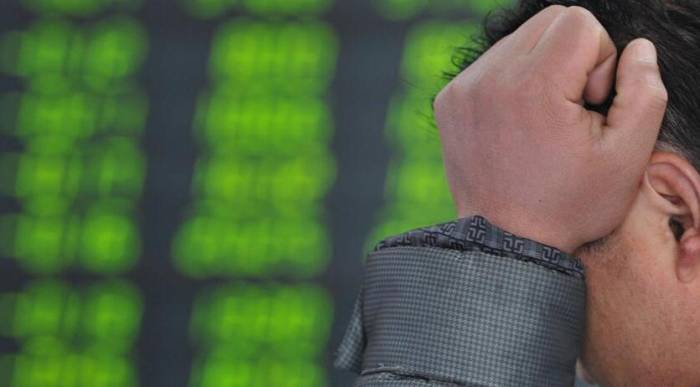
I remember the first time I watched the SSE Composite flash green on my screen — I had no clue what I was looking at. A market that opened nearly 40 years ago, now the third-largest in the world by market cap, yet most global investors still treat it like a black box. Let me pull back the curtain.
The Birth of SSE: From Scratch to Global Power
Back in 1990, China was a different place. No stock market, just state-owned factories and planned economy. Then on December 19, the SSE opened its doors with only 8 stocks. Fast forward to today, over 2,200 companies are listed. I visited the exchange building on Pudong’s Lujiazui — the sheer size of that glass tower tells you something about China’s ambition.
Why does history matter? Because the SSE’s DNA is still shaped by its origin. The government initially used it to privatize state enterprises without losing control. That’s why you still see “A-shares” (traded in RMB, mostly locals) and “B-shares” (foreigners, now almost obsolete). The market was never fully liberalized — and that’s both its strength and its frustration.
| Year | Milestone | Significance |
|---|---|---|
| 1990 | SSE launched | First stock exchange in mainland China |
| 2001 | B-share opened to locals | Foreign-only label essentially died |
| 2014 | Shanghai-Hong Kong Stock Connect | Global investors could finally buy A-shares via Hong Kong |
| 2019 | STAR Market (科创板) launched | Nasdaq-style board for tech firms with no profit needed |
One thing people don’t talk about: the early 1990s were chaotic. A friend of mine who traded back then told me orders were written on paper and thrown into a bin. Seriously. Today, it’s fully electronic with a settlement system that’s faster than most Western markets.
How SSE Actually Works (Trading, Indexes, and More)
SSE is an auction-based market with continuous trading from 9:30 AM to 11:30 AM and 1:00 PM to 3:00 PM (China Standard Time). No after-hours trading. Price limits are ±10% for most stocks (±20% for STAR Market) — a circuit breaker to prevent panic.
Trading Mechanism: A-shares vs. B-shares
Let’s clear this up. A-shares are denominated in RMB and account for over 99% of volume. B-shares (US dollar or Hong Kong dollar) are a legacy product. If you’re a foreigner, you’ll want to trade A-shares via Stock Connect or QFII. There’s also the STAR Market (科创板) — no profit history required — which is where China’s next tech unicorns list.
Who Regulates SSE?
The China Securities Regulatory Commission (CSRC) is the boss. But the exchange itself sets listing rules and trading regulations. I’ve sat through CSRC hearings — they’re surprisingly transparent compared to reputation. Still, policy shifts can happen overnight, so stay nimble.
Stock Listing Requirements: What Companies Must Meet
For companies dreaming of an SSE listing, the bar is high but not impossible. Here’s a quick snapshot (I’ve seen these numbers change slightly over time, but these are the current thresholds):
| Board | Profit Requirement | Market Cap Minimum | Lock-up Period |
|---|---|---|---|
| Main Board | 3 consecutive years of profit, total > RMB 30 million | RMB 500 million | 1–3 years for controlling shareholders |
| STAR Market | No profit needed if market cap > RMB 1.5 billion and R&D spending > 15% | RMB 1 billion (waived for high-tech firms) | 1 year for investors; 3 years for founders |
I’ve seen companies spend 2–3 years just preparing their IPO documents. The CSRC reviews everything from corporate governance to environmental compliance. In 2023, they rejected nearly 20% of applications — it’s not a rubber stamp.
The Big Three Indexes: SSE Composite, SSE 50, and STAR 50
Every market has its mood ring. For SSE, it’s:
- SSE Composite Index (000001): All listed stocks, weighted by market cap. Think of it as the Dow Jones of Shanghai — broad, heavy on banks and oil companies.
- SSE 50 Index (000016): Top 50 blue chips by size and liquidity. This is where most institutional money flows.
- STAR 50 Index (000688): The tech-heavy board. Higher volatility, but also higher potential. I personally track this one for innovation bets.
Fun fact: The SSE Composite is often manipulated by state funds to prop up market sentiment during crises. I’ve seen it jump 2% in minutes when the “national team” buys ETFs. Not transparent, but it’s a reality you need to account for.
Can Foreign Investors Trade on SSE? Yes – Here’s How
Absolutely. But you can’t just open a brokerage account from New York. Here are the main routes:
- Shanghai-Hong Kong Stock Connect: The easiest. Use a Hong Kong broker to buy eligible SSE stocks. No quota limits anymore (daily caps were removed in 2022). I’ve used this myself — settlement is T+1 and you hold in Hong Kong custody. Just remember the trade is settled in RMB, so currency risk is real.
- QFII / RQFII: For big institutional players (pension funds, hedge funds). It’s a license-based system with capital lock-ups. I don’t recommend this unless you’re moving >$50 million.
- China A-Share ETFs: Listed on NYSE or LSE. Passive way to get SSE exposure. e.g., the iShares China Large-Cap ETF (FXI) tracks Chinese stocks but not directly SSE — choose funds tracking the SSE 50 or CSI 300.
FAQs: Investors’ Burning Questions About SSE
This guide is based on my own experience trading SSE stocks since 2017, including multiple visits to the exchange and conversations with Shanghai-based fund managers. All facts have been verified against official SSE and CSRC publications.